QuickSpiral: DIY Spiral Stair Kit
Overview
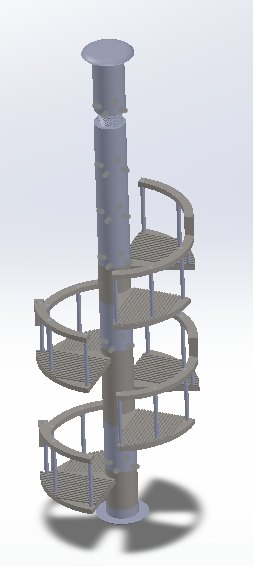
A spiral staircase that a homeowner can put together without a contractor: a stack of identical stair modules that lock onto a central column, built up step by step to the height you need.
In the first round we designed the kit, its bill of materials and the installation instructions. In the second we used Quality Function Deployment and a House of Quality to decide what to improve, then redesigned it as QuickSpiral 2.0.
My part
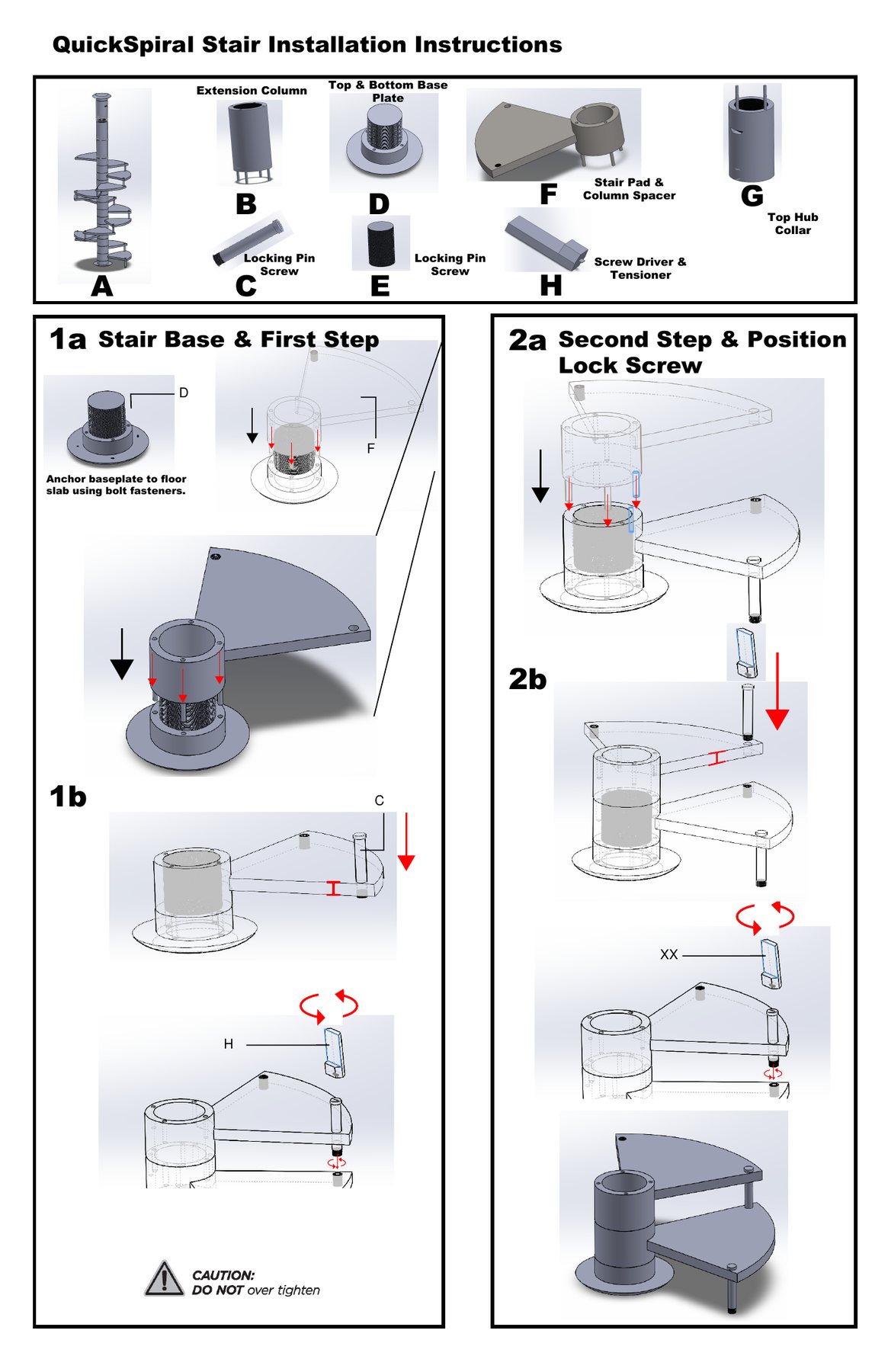
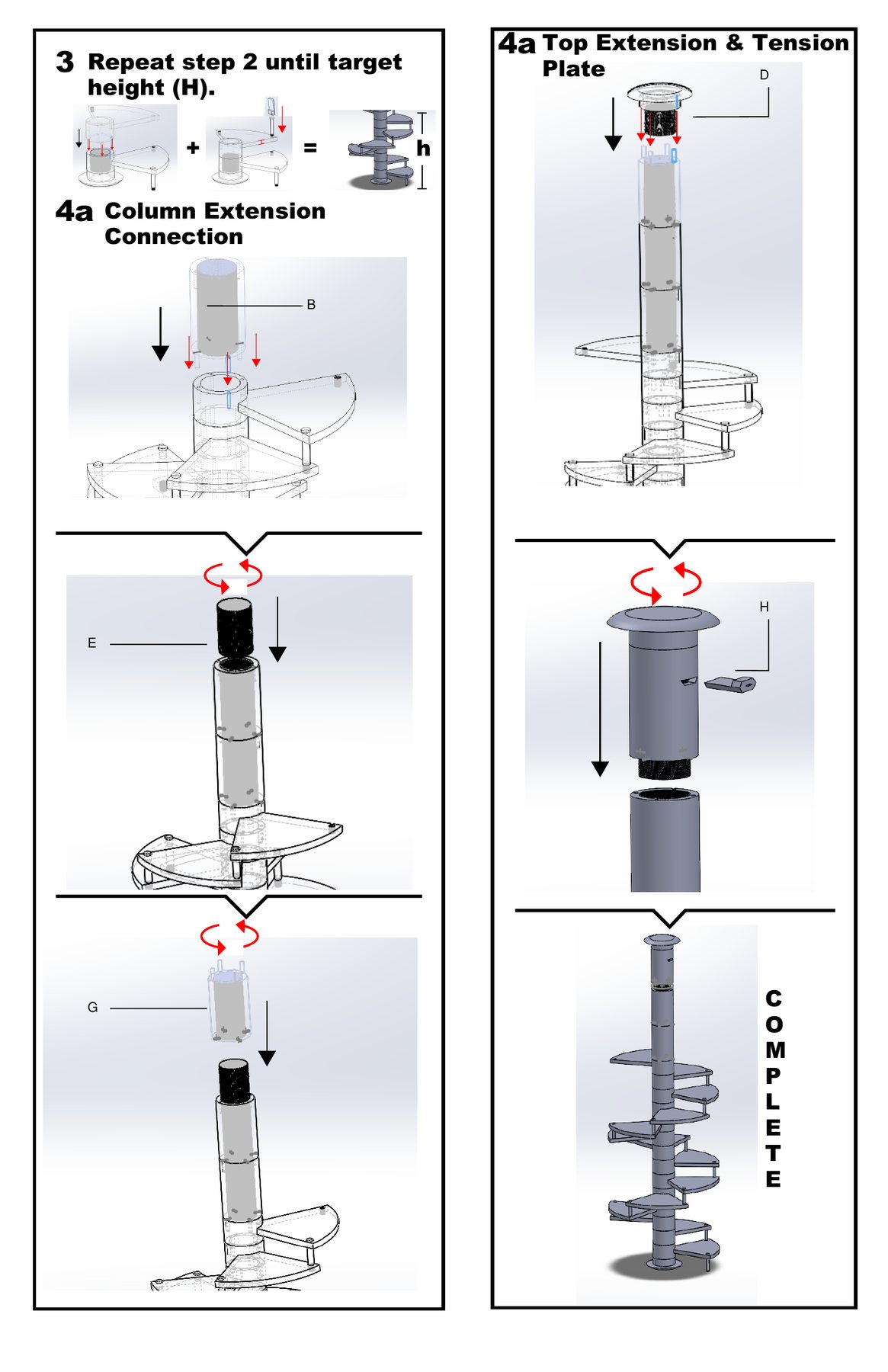
I made the two-page installation instruction sheet below in Bluebeam, and worked with the team on the House of Quality and the redesign.
Round 1: the kit
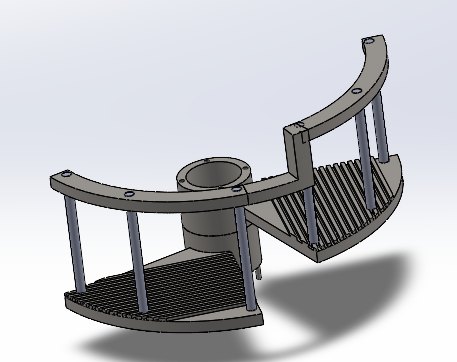
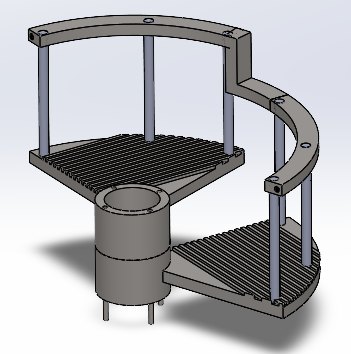
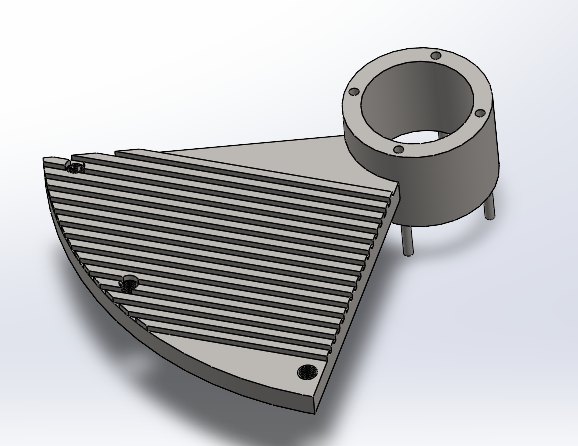
Each step is a stair pad with a column spacer that slides onto the column and locks with a pin screw. Extension columns connect for taller stairs, and a top hub collar and tensioner pull the whole stack tight.
| Part | Qty | Cost (CAD) |
|---|---|---|
| Stair pads & spacers | 14 | $700 |
| Top and bottom base plates | 2 | $380 |
| Extension columns | 2 | $240 |
| Bolts | 8 sets | $200 |
| Top hub collar | 1 | $100 |
| Locking pin screws | 16 | $30 |
| Screwdriver & tensioner | 1 | $15 |
| Kit total | $1,665 |
Round 2: what to improve
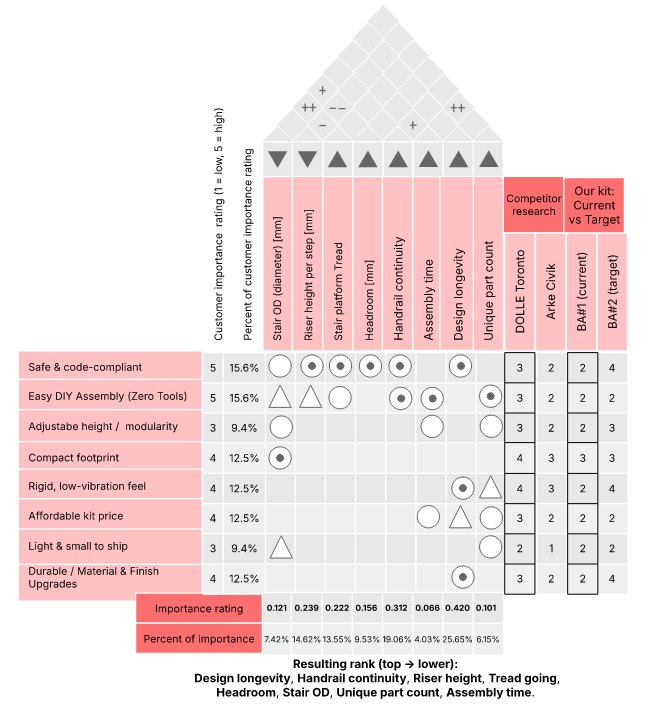
We listed what homeowners, installers and designers would want from the kit, weighted each need, and mapped them to eight measurable targets in a House of Quality. Safety and easy DIY assembly came out on top for customers. On the engineering side, design longevity, handrail continuity and riser height scored highest.
QuickSpiral 2.0
- Continuous handrail: one unbroken helical rail, so there’s nowhere your hand has to let go.
- Ribbed tread: anti-slip ribs and a templated hole pattern, so every step goes on the same way.
- Materials and finish: upgraded materials and coatings, aiming for a 20-year finish.
Against two kits on the market (Dolle Toronto and Arke Civik), 2.0 matched the best of them on handrail continuity and beat both on footprint. Where it fell short: the riser came out at 203 mm against a 190 mm target, and the unique part count went up. Both were next on the list to fix.